Vision
Secure, healthy and prosperous communities.
Communities where people flourish under effective, responsive and accountable leadership.
About AFLI
AFLI is an African policy and leadership institute connecting research, public institutions and communities to improve human wellbeing.
Our identity
AFLI is a policy think tank and leadership institute working in research, executive education, peacebuilding, governance reform and strategic advisory services. Its documented programme work includes PACED community land governance in Moroto and the approved transparency, accountability and anti-corruption training series.
Established in 2004, the Africa Leadership Institute (AFLI) is a learning, research, advocacy and public policy think tank that also runs socio-economic development programmes for marginalised, peripheral and cross-border communities, including pastoralist communities, in the Horn of Africa, East Africa and the Great Lakes Region. Its Certificate of Incorporation is dated 26 April 2004. It is registered with the National Bureau for Non-Governmental Organisations under the NGO Act 2016, holding Registration Certificate No. 6250 and NGO Permit No. 7094, both issued on 28 October 2021. The permit runs to 28 October 2026, and its renewal is under way. AFLI's governance work includes the Parliamentary Performance Scorecard, most recently delivered with the Democratic Governance Facility from 2018 to 2023. In Karamoja, AFLI has worked for 18 years from its zonal office on Angiroi Road, Moroto.
Its mandate is to empower communities and influence the actions and decisions of leaders so that public policy, budgets and services improve people’s quality of life.
Vision
Communities where people flourish under effective, responsive and accountable leadership.
Mission
To educate and empower communities and positively influence their leaders for a better quality of life.
Institutional capability
See the Institute’s capability across policy research, accountable governance, peacebuilding, regional development, livelihoods and community inclusion.
Theory of change
Improved wellbeing depends on public institutions and communities playing mutually reinforcing roles.
Leaders use sound evidence, uphold rights, make responsible laws and budgets, and deliver services transparently.
Citizens access useful information, take up services and opportunities, make informed choices and hold duty-bearers accountable.
Leadership and governance
AFLI brings together public leadership, international development experience and multidisciplinary expertise in research, governance, peacebuilding, communication, finance and evaluation.
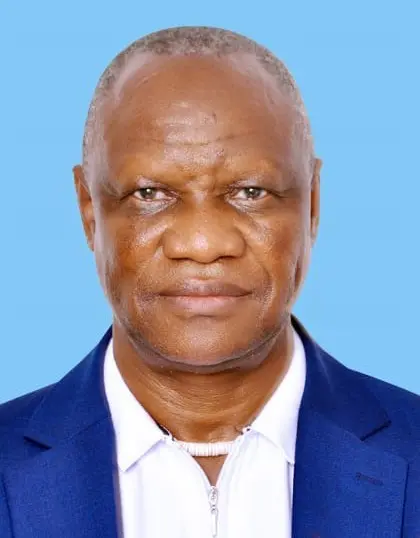
Hon. David Bwangamoe Pulkol is a public policy specialist, researcher and former senior public servant with extensive experience in governance, national security, regional peacebuilding and socio-economic development. He has served as a Member of Parliament, Minister of State for Karamoja Affairs, Deputy Minister for Education and Sports, Deputy Minister for Water and Mineral Development, Director General of the External Security Organisation, and Deputy Regional Director of UNICEF for Eastern and Southern Africa.
As Executive Director, he leads AFLI’s policy research and strategic advisory work on governance, regional security, pastoral development and economic transformation. He holds an MSc in Economics from the London School of Economics and a bachelor’s degree in Social Work and Social Administration from Makerere University.
CHAIRPERSON BOARD OF DIRECTORS
Dr Thelma M. Awori is an international development leader with more than four decades of experience in development policy, programme management, institutional leadership and women’s empowerment. She previously served as United Nations Assistant Secretary-General and Director of UNDP’s Regional Bureau for Africa, overseeing operations across 45 countries. She has also served as UN Resident Coordinator and UNDP Resident Representative in Zimbabwe, Deputy Director of UNIFEM, and Chief of UNIFEM’s Africa Section.
Her work has advanced women’s participation in agriculture, peacebuilding, economic development and public decision-making. Dr Awori holds a doctorate in Adult Learning and Leadership from Columbia University, a master’s degree from the University of California, Berkeley, and a bachelor’s degree from Harvard University.
Specialist team
Dr Daniel Lumonya is a development sociologist, researcher and university educator with experience in policy analysis, rural development, agrarian change, programme management and institutional leadership. He has taught at Makerere University, Cornell University and other higher-education institutions, and has held academic leadership responsibilities across several African study programmes. His research examines agricultural markets, land relations, rural livelihoods, grassroots politics and the relationship between the state and civil society. At AFLI, he contributes to research and policy advisory work supporting national development and economic transformation. Dr Lumonya holds a PhD and an MSc in Development Sociology from Cornell University, an MA in Social Sector Planning and Management, and a bachelor’s degree in Social Work and Social Administration from Makerere University.
David Mukholi is an experienced journalist, editor, researcher and media-management specialist. He worked with Vision Group for more than three decades in senior roles including Managing Editor for Editorial, Sunday Vision Editor, Deputy Sunday Vision Editor, Chief Librarian and staff writer. He helped develop Vision Group’s editorial policy, strengthened professional standards and led major editorial projects, including the Uganda at 50 media project. His expertise covers editorial leadership, investigative journalism, development communication, publishing, information management and media research. He holds a Master of Arts in Development Studies from Uganda Martyrs University, a postgraduate diploma in Journalism and Media Management from Uganda Management Institute, and qualifications in library and information science from Makerere University.
Susan Anibaya Akol is a governance, organisational development and capacity-building specialist with more than a decade of experience in programme management, research, monitoring and evaluation, institutional strengthening and parliamentary engagement. She has managed development programmes in governance, accountability, anti-corruption, youth leadership, health and civic engagement. Her work has included supporting the Inspectorate of Government, Office of the Auditor General and Public Procurement and Disposal of Public Assets Authority through joint training, leadership development and organisational assessment. She previously led youth and institutional engagement programmes at AFLI. Susan holds an Advanced Master of Science in Development Evaluation and Management from the University of Antwerp, a Master of Arts in Public Administration and Management, and a bachelor’s degree in Social Work and Social Administration.
Everlyn Mande is a Certified Public Accountant with more than 15 years of experience in financial management, administration, taxation, institutional compliance and university teaching. She has held senior finance roles at LifeNet International, Uganda Revenue Authority and Uganda Christian University. Her expertise includes budgeting, financial reporting, grant management, internal controls, statutory compliance, audit preparation, business-process improvement and team leadership. She has also contributed to major institutional systems projects, including business intelligence and electronic fiscal-device initiatives. Everlyn holds a Master of Business Administration in Accounting and Finance from Nkumba University, a Bachelor of Business Administration and Management from Uganda Martyrs University, and the Certified Public Accountant qualification of Uganda.
Pasquale Ngorok is a development practitioner and consultant specialising in conflict resolution, peacebuilding, participatory planning, gender analysis, programme management and results-based monitoring and evaluation. He has worked with government institutions, civil society organisations, humanitarian agencies and development partners across Eastern Africa. His assignments have included strategic planning, programme design, evaluations, community consultations, capacity building and policy research. Through AFLI’s work with Operation Wealth Creation, he has supported cross-border consultations, workshops and development of the Uganda–Kenya Resource Sharing Agreement and pastoralist code of conduct. He holds a Master of Arts and a bachelor’s degree in Philosophy from Makerere University, together with specialised training in leadership, peacebuilding and development management.
Rael Cheptoris is a monitoring, evaluation and development specialist with more than a decade of experience in education, research, programme management, curriculum development and institutional administration. Her work combines programme-performance assessment with practical experience in teaching, training, research design and organisational learning. At AFLI, she has supported monitoring and evaluation, parliamentary performance assessment, civic engagement and policy research. She has also taught development studies and contributed to academic programme management at Uganda Christian University. Rael holds an Advanced Master of Science in Development Evaluation and Management from the University of Antwerp, a Master of Development Studies, and a Bachelor of Development Studies from Uganda Christian University.
Grace Sirrah Kiconco is a social-development practitioner and participatory researcher with experience dating back to 1994. Her work focuses on gender-based violence, children in conflict with the law, trauma arising from armed conflict, and the experiences of marginalised women and girls. She has undertaken sensitive research involving survivors of rape and sexual violence, women in refugee settlements and prisons, and girls in rehabilitation centres. Grace has also facilitated action research, alternatives-to-violence training and trauma-healing education. She brings strong experience in field research, community engagement and preparation of evidence-based reports with practical recommendations. She holds qualifications in Social Work and Social Administration and Social Development Planning and Management.
Jonathan Okeny is a communications and information technology professional with over six years of experience in strategic communications, digital media management, stakeholder engagement and technology systems. At AFLI, he supports public communication, institutional visibility and engagement with partners, donors and other stakeholders. His work includes communications strategy, newsletters, press releases, funding reports and stakeholder briefs, as well as website and social-media management, media relations, branding and internal communication. Jonathan holds a Bachelor of Information Systems from Kyambogo University. He is trained in communications for advocacy and holds professional certifications in networking and cybersecurity. His combined communication and technology skills strengthen AFLI’s digital presence and support its policy advocacy, governance and civic-engagement programmes.