Impact and case studies
Work that connects policy, institutions and community agency.
The figures below are limited to documented records. Proposed models and historical projects are clearly identified rather than presented as completed outcomes.
Peace and regional security
From raiding routes to trading routes.
AFLI’s work links disarmament and dialogue with lawful mobility, shared-resource governance, youth opportunity and regional trade.
The policy pathway developed through a 2023 security mission, technical research and bilateral engagement, and subsequent community peace and border-governance processes.
Explore the evidence pathway →Reformed Karacuna: Fr Raphael Lobereei’s 2026 festival address documents the shift from armed raiding corridors towards trade, savings and enterprise.
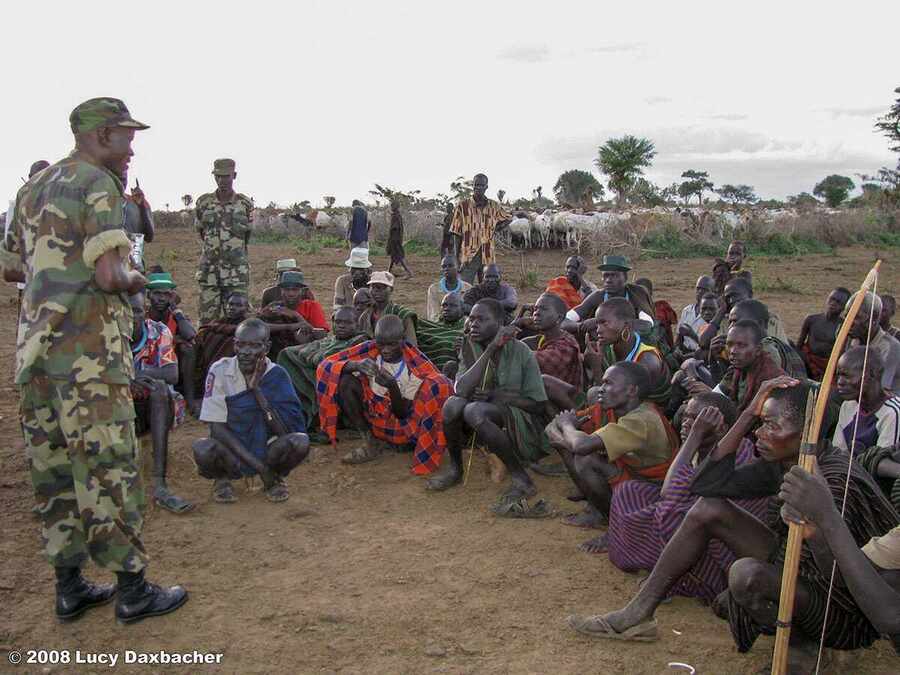
Read the speech evidence →Civil–military cooperation: AFLI’s CIMIC programme combined peace education, human-rights training, community feedback and confidence-building during disarmament.
Explore CIMIC evidence →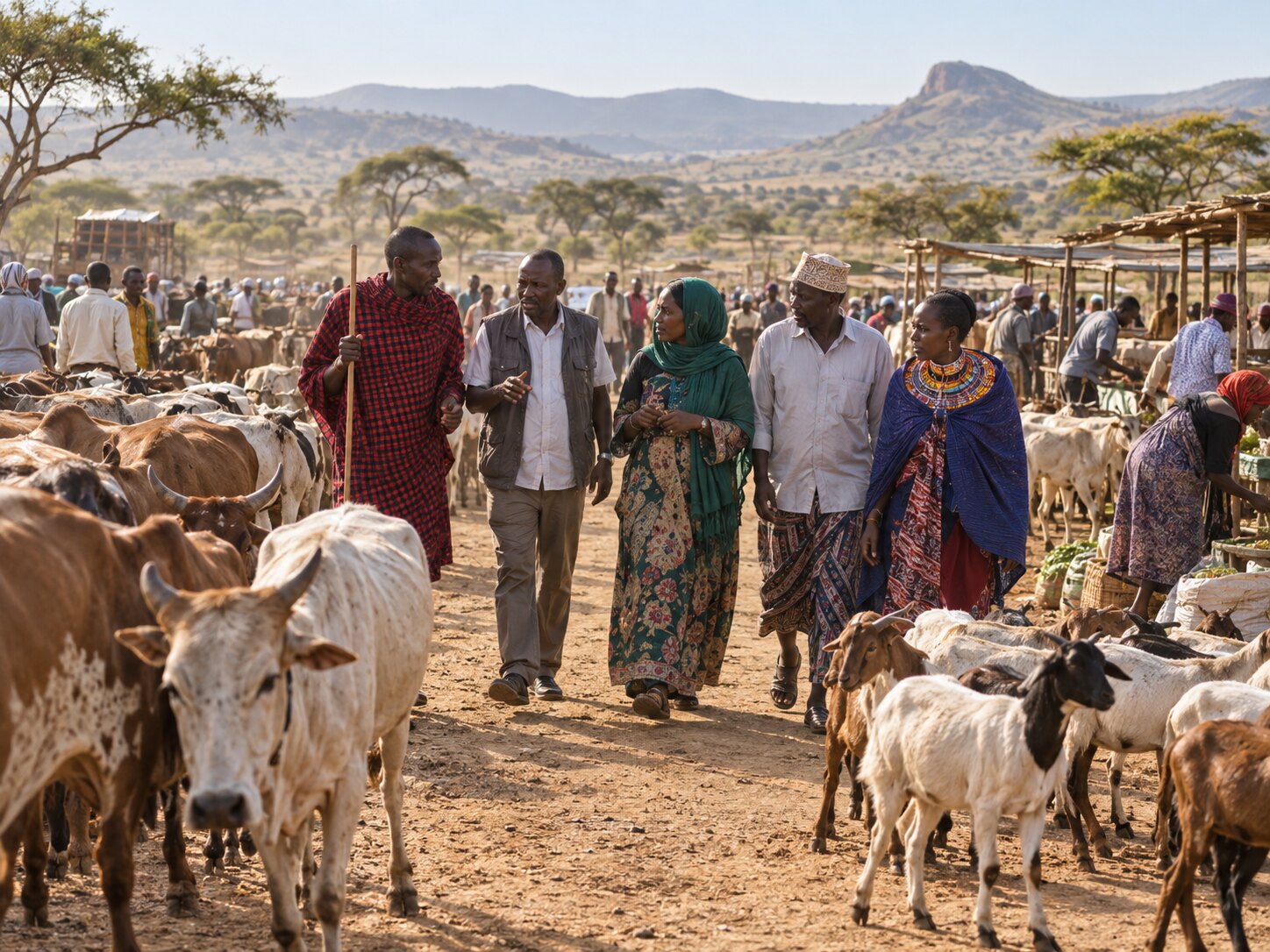
11th Karamoja Cultural Festival · Moroto
Dialogue grounded in culture and regional realities.
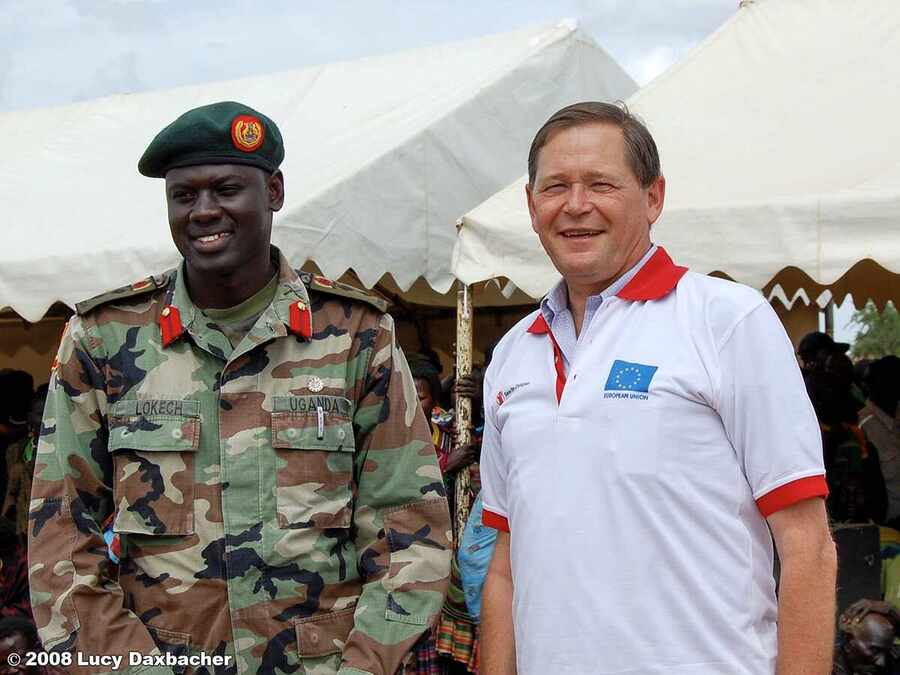
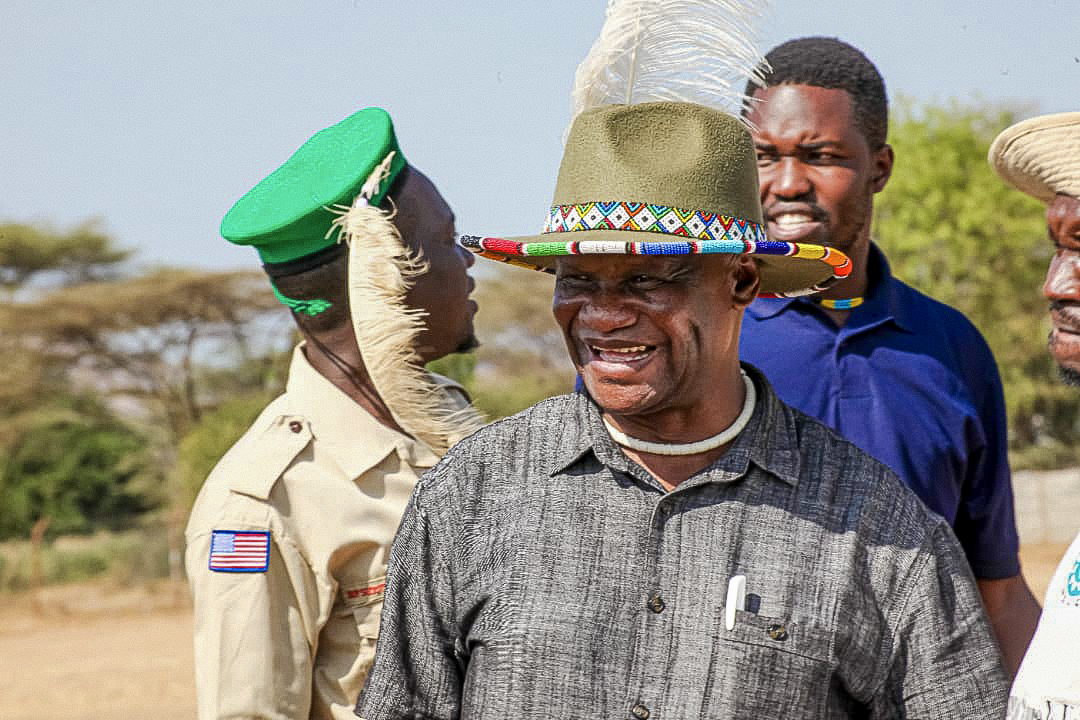
During the festival, AFLI Executive Director Hon. David Bwangamoe Pulkol participated in public presentations and working dialogues concerning peace, mobility, shared resources and regional cooperation.
View the festival gallery
Livestock and pastoral economy
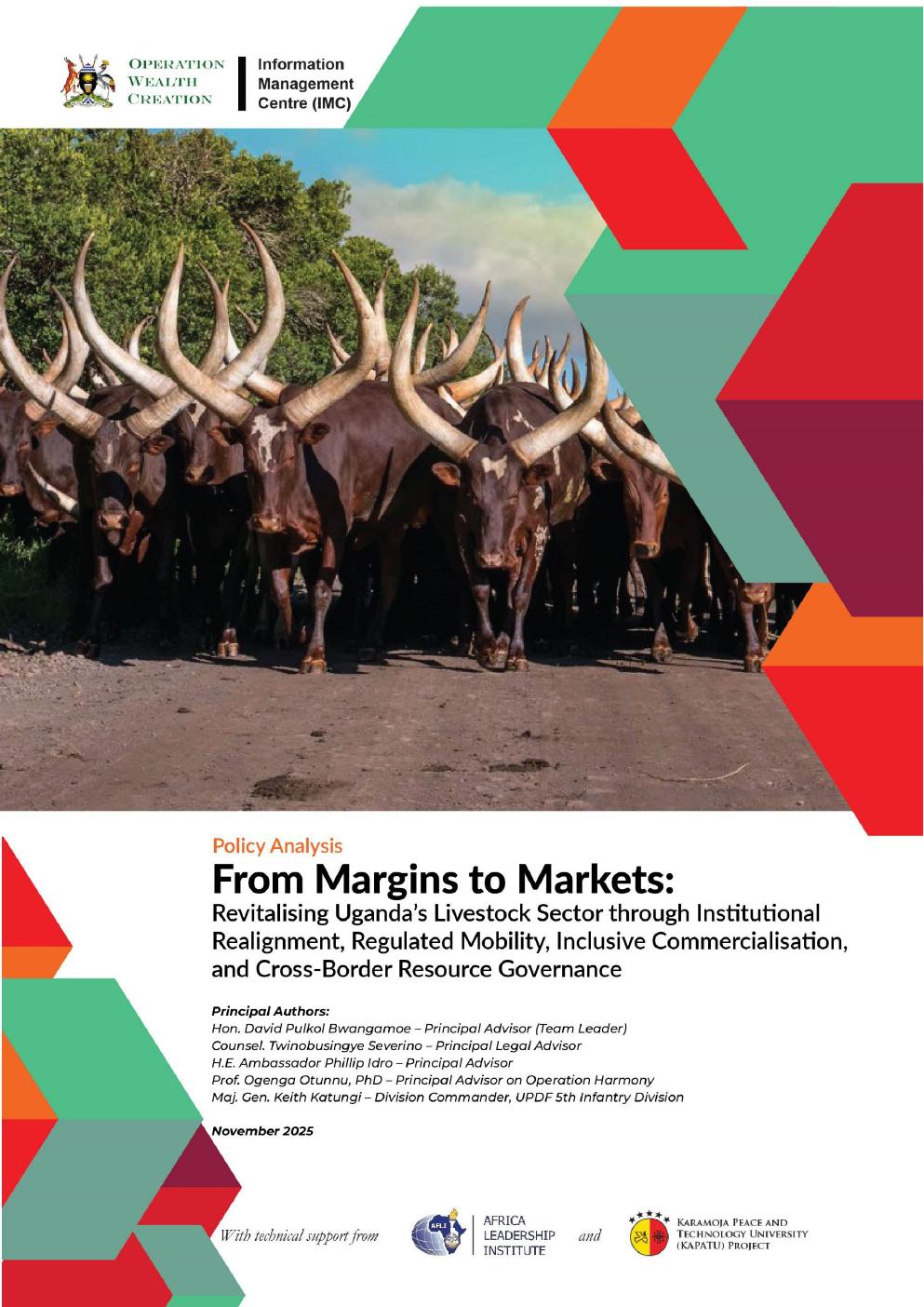
From Margins to Markets.
A long-term reform pathway for competitive, climate-resilient and peace-supporting livestock systems.
The programme joins institutional reform, regulated mobility, commercialisation and cross-border governance across Uganda’s cattle corridor and priority regional routes.
Institutional alignmentRegulated mobilityInclusive marketsRegional governance
Community agency
Rights, accountability and enterprise.
Five documented examples presented through one consistent case-study framework.
01
Land rights and benefit sharing
- Challenge
- Pastoral communities required stronger legal identity, land documentation and negotiating capacity in areas affected by extractive and commercial investment.
- AFLI’s intervention
- Training, community mobilisation, demarcation and public information on customary ownership and fair benefit-sharing.
- Partners
- Moroto District, Rupa and Lotisan sub-counties, community land institutions and RUCODET.
- Location and period
- Moroto District, Uganda; PACED programme period.
- Results
- Community institutions gained practical knowledge of land governance, documentation and benefit-sharing processes.
- Evidence source
- PACED Final Programme Report ↗
- Lessons
- Legal documentation is most useful when paired with community organisation and access to clear public information.
- Next steps
- Continue institutional support, documentation and engagement with responsible investors and public authorities.
02
Youth agripreneur pathway
- Challenge
- Young people required market-oriented skills and viable roles within locally relevant agricultural value chains.
- AFLI’s intervention
- Mobilisation and mentoring across 18 Moroto parishes, followed by residential training in poultry, piggery, aquaculture and cuniculture.
- Partners
- Moroto District Local Government, GOAL and Gudie Leisure Farm.
- Location and period
- Moroto District, with training in Kampala, Luwero and Isingiro; programme period documented by AFLI.
- Results
- 108 young people were selected, 70% women; 78 proceeded to training across six mutually reinforcing enterprise roles.
- Evidence source
- View the youth agripreneur evidence set →
- Lessons
- Training is stronger when production, animal health, inputs, marketing and transport are developed as one commercial system.
- Next steps
- Support youth apprenticeship, enterprise associations, farmer service centres and collective market access.
03
Citizen service monitoring
- Challenge
- Citizens needed practical tools to understand budgets, procurement, infrastructure delivery and their rights in public-service systems.
- AFLI’s intervention
- Development of four TAAC learning modules and support to citizen monitoring and constructive engagement with duty-bearers.
- Partners
- Office of the Auditor General, Inspectorate of Government and PPDA; produced by AFLI with GIZ support.
- Location and period
- Uganda; publication date is not stated in the supplied draft handbooks.
- Results
- Four training modules provided a structured basis for understanding corruption, institutional roles, local service delivery and public-infrastructure oversight.
- Evidence source
- View the four-module evidence series →
- Lessons
- Accountability improves when citizens receive understandable information and have safe forums for direct institutional engagement.
- Next steps
- Confirm final publication status, update time-sensitive legal references, extend facilitator training and provide accessible editions.
04
HIV linkage and retention in care
- Challenge
- Mobile and refugee communities faced distance, stigma and continuity-of-care barriers.
- AFLI’s intervention
- Community testing, counselling, referral and follow-up through outreach teams, peer educators and Community Linkage and Retention Assistants.
- Partners
- AFLI as implementing organisation, with KAPATU Project as technical partner and participating community and health-facility teams.
- Location and period
- Yumbe District and Bidibidi Refugee Settlement; January 2024–March 2025. The report also records April 2025 follow-up data.
- Results
- The programme reports full re-engagement among 119, 78 and 31 clients followed up in three reporting periods. These cohorts are not summed because overlap is not ruled out.
- Evidence source
- View final report record →
- Lessons
- Community linkage can reduce access barriers; more precise risk profiling and hotspot mapping are needed to improve testing yield.
- Next steps
- Strengthen digital tracking, transport, field supervision, workforce development and operational research.
05
Accelerated child survival and development
- Challenge
- Children’s health, protection and access to essential services required stronger caregiver action, leadership commitment and budget prioritisation.
- AFLI’s intervention
- Caregiver empowerment, leadership capacity-building, advocacy for children’s rights and efforts to create budgetary space for child-focused services.
- Partner
- Funded by UNICEF.
- Location and period
- Karamoja Region; the supplied summary does not state the implementation period.
- Results
- The programme summary reports adoption of the Karamoja Declaration for Children, improved enrolment, immunisation and service access, stronger uptake of health messages and reduced child labour and domestic violence against children.
- Evidence source
- View the programme evidence record →
- Lessons
- Community behaviour, leadership commitments and public-resource decisions must reinforce one another to improve children’s wellbeing.
- Evidence priority
- Publish disaggregated indicator data, baselines, implementation dates and evaluation methods before converting reported improvements into quantified impact.
Applied institutional evidence
Historical records used to inform present decisions.
AFLI reconstructs complex public records while separating verified facts from unresolved claims or proposals.
Uganda’s ranch restructuring record
The study reconstructs 206 subdivided ranches, 165,308.7 hectares recorded as reallocated, and unresolved title, registry and compensation questions.
Moroto Ateker Cement and Marble Company
A historical 2018–20 project-development record examining land-as-equity, local participation and the safeguards required for responsible industrial investment. It is not a current investment offer.
KAR-I-LED shared prosperity model
A proposed settlement-based model linking community organisation, land, skills, production, finance, value addition and markets. Proposed sites remain subject to validation and community consent.
Ateker origins and migrations
The study brings together historical narratives on Ateker origins, migration routes, settlement patterns and the artificial separation of related communities across modern borders.
Open evidence PDF ↗Peace accords since Lokiriama
An inventory of verbal and written peace agreements since the 1973 Lokiriama Peace Accord, recording their objectives, actors, strategies and lessons for present cross-border peacebuilding.
Open evidence PDF ↗CIMIC and Usalama kwa Wote
AFLI’s Civil–Military Cooperation model linked security agencies, civil authorities, elders and communities through public mobilisation, peace education, human-rights training, cooperation centres and community conciliation. This institutional experience provided a foundation on which Usalama kwa Wote was built.
Open evidence PDF ↗Karamoja Regional Development Plan synthesis
The 2023 synthesis reviews earlier interventions and assembles a proposed pathway towards a peaceful, productive and resilient Karamoja by 2035, spanning security, livestock, crops, mining, tourism, infrastructure, human capital and accountable delivery.
Status: policy synthesis and proposed development framework; targets are not presented as achieved results.
Open synthesis report PDF ↗